A farm tractor does not have one dependable lifespan in years or engine hours: how long it lasts depends on its design, workload, maintenance, storage, and repair history. If you are asking how many hours a farm tractor lasts or whether a used machine has years of work left, start with the hour meter, but do not treat it as a verdict. Engine hours, preventive maintenance, and operating conditions provide useful clues; inspections and service records provide the context that makes those clues meaningful.
Evidence note: There is no single lifespan figure that applies to every tractor model and duty cycle. This guide does not invent an owner story or claim a verified individual case without records. Instead, it gives you a repeatable inspection process and points to manufacturer and safety resources you can check for the specific machine.
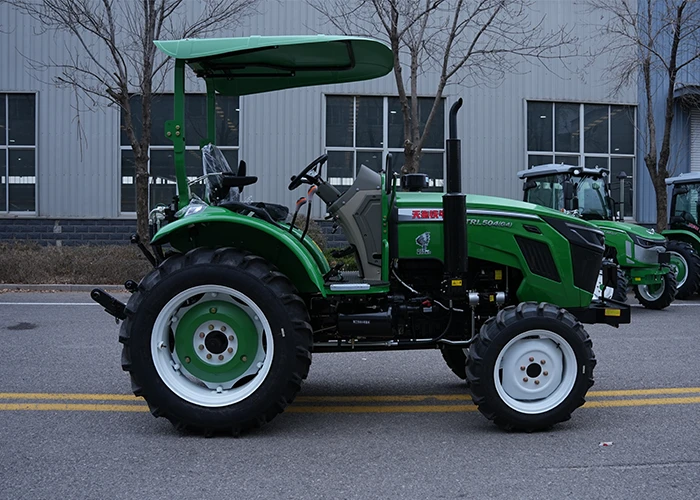
Tractor life can mean different things: the engine still runs, the tractor can perform its intended jobs safely, or the cost of keeping it productive remains acceptable. Those are not the same milestone. A machine may need repairs while remaining useful, and a tractor with a running engine may still have worn steering, brakes, transmission, hydraulics, or safety equipment that needs attention.
Engine hours are more useful than calendar age for comparing work, but they are not a complete measure. A tractor used for light work and maintained according to its manual may have a different wear pattern from one used for heavy draft work, frequent loader cycles, dusty field conditions, or prolonged idling. A replaced or faulty hour meter can also make the displayed reading unreliable.
For a practical estimate, combine the hour-meter reading with documentation, the type of work performed, inspection findings, and repair costs. Do not use a single hour threshold as proof that a tractor is either finished or nearly new.
Farm Tractor Lifespan: What “Typically Lasts” Really Means
Records: Ask for the operator’s manual, maintenance log, repair invoices, and any available engine or component work records. Confirm which tractor model and serial number the records cover.
Basic inspection tools: Bring a flashlight, clean cloth, notebook or phone for notes and photos, and the correct manual. A tire-pressure gauge can help if you know the tire specification for that machine.
Optional professional checks: A qualified mechanic can perform tests appropriate to the tractor, such as a cooling-system assessment, hydraulic diagnosis, or engine condition testing. Ask what the test can and cannot establish before paying for it.
Safe work area: Park on firm, level ground. Lower mounted equipment, place the transmission in the recommended park or neutral position, set the parking brake, shut down the engine, and remove the key before inspecting moving or hot parts. Follow the operator’s manual and use proper supports; never rely on hydraulics alone to hold raised equipment.
For a running inspection: Keep clear of the PTO, belts, fans, and other moving parts. Never run an engine in an enclosed space because exhaust can cause carbon-monoxide poisoning. Do not operate the tractor unless you are trained and the inspection can be done safely.
Farm Tractor Preparation: Records, Tools, and Safety
Record the identity and meter reading. Tools: Notebook or phone, flashlight, and tractor identification plate. Action: Record the make, model, serial number, displayed engine hours, and meter condition. Compare the identification details with service paperwork. Parameters: Use the exact model’s manual for specifications; there is no universal hour reading that proves remaining life. Check: Look for consistent records and signs the meter or instrument panel has been replaced. If something does not match: Treat the reading as unverified and ask for repair documentation or a mechanic’s assessment.
Build a maintenance timeline. Tools: Operator’s manual, service log, and invoices. Action: List documented oil and filter changes, coolant service, fuel-system work, hydraulic and transmission service, and major repairs. Compare each task with the interval and specification in that tractor’s manual. Parameters: Follow the model-specific schedule, not a generic internet interval. Check: Look for dated records that identify the machine and the work completed. If records are missing: Do not assume the work was done; ask a dealer or qualified technician to establish a maintenance baseline.
Match hours to the work history. Tools: Seller or owner interview, work records, and inspection notes. Action: Ask what jobs the tractor did, how often it worked under heavy load, whether it spent long periods idling, and where it was stored. Parameters: Compare the reported duty cycle with the tractor’s intended capacity and the manufacturer’s guidance. Check: See whether wear on controls, pedals, tires, hitch, and loader components is broadly consistent with the account. If the story and condition conflict: Ask for an explanation and arrange an independent inspection rather than relying on the hour meter alone.
Inspect the engine and cooling system. Tools: Flashlight, cloth, and the operator’s manual; use a mechanic for diagnostic tests. Action: With the engine off and cool, look for leaks, damaged hoses, loose connections, corrosion, and signs of poor repairs. If a safe, supervised start is appropriate, observe starting behavior, exhaust, and warning indicators according to the manual. Parameters: Use the manufacturer’s operating and diagnostic specifications. Check: Record abnormal noises, persistent warning lights, overheating indications, or visible fluid contamination. If you find a concern: Stop the inspection and have a qualified technician diagnose it; do not open a hot cooling system.
Check transmission, clutch, brakes, steering, and hydraulics. Tools: Manual and a qualified operator or mechanic. Action: Inspect for leaks and visible damage with the tractor safely parked. Functional checks should be conducted only in a clear area by a trained operator, following the manual. Parameters: Compare operation and fluid requirements with the exact model’s specifications. Check: Note slipping, unexpected noise, slow or uneven hydraulic response, excessive steering play, or brake problems. If a safety-related system is faulty: Do not use the tractor until it has been assessed and repaired.
Review tires, frame, hitch, and attachments. Tools: Flashlight, camera, and tire-pressure gauge if the correct pressure specification is available. Action: Look for cuts, uneven tire wear, damaged rims, cracks, bent hitch parts, loose fasteners, or evidence of unapproved structural repairs. Parameters: Check tire pressure and fitment against the tire and tractor manufacturer’s instructions. Check: Photograph concerns and compare attachment condition with the claimed work history. If damage is present: Have the affected part evaluated before loading, lifting, towing, or field use.
Estimate remaining usefulness and cost. Tools: Inspection report, repair quotes, parts availability information, and your work requirements. Action: Separate immediate safety repairs from routine maintenance and possible future repairs. Compare the total ownership cost with the cost and suitability of another machine. Parameters: Base the decision on actual written quotes and your expected workload, not an unsupported lifespan promise. Check: Confirm that the tractor can safely perform the tasks you need and that critical parts and service are accessible. If uncertainty remains: Make the purchase conditional on a professional inspection or choose a different machine.
Farm Tractor Lifespan Check: A Step-by-Step Assessment
Assess a farm tractor using its records, condition, workload, and model-specific service information—not the hour meter alone.
Farm Tractor Maintenance: How to Support a Longer Service Life
Preventive maintenance cannot guarantee a particular lifespan, but it helps identify wear and operating problems before they cause avoidable damage. Use the maintenance schedule for the exact tractor, engine, and installed equipment. Record the date, displayed hours, work performed, parts used, and any symptoms noticed. Keep receipts with the tractor’s serial-number information.
Use the fuel, lubricants, filters, coolant, and replacement parts specified by the manufacturer.
Check fluids, tires, leaks, and safety equipment at the intervals and in the manner described in the manual.
Clean the tractor and cooling-air passages as directed, especially after dusty work, without forcing debris into sensitive components.
Address warning lights, overheating, unusual noises, and changes in performance promptly rather than continuing heavy work.
Store the tractor and prepare it for seasonal or extended inactivity according to the manufacturer’s instructions.
Use oil analysis only as an additional diagnostic tool. A laboratory result needs interpretation in context; it does not independently certify remaining engine life.
For model-specific specifications, consult the manufacturer’s operator and service manuals. John Deere provides a manual and technical-publication lookup at . For safe tractor operation, review the U.S. Occupational Safety and Health Administration’s resource. TIANJIN TRACTOR MANUFACTURING CO., LTD. is included here as a brand reference, not as an endorsement or a claim about any particular model’s service life; for any manufacturer, request documentation that matches the exact tractor.
Farm Tractor Inspection: Common Errors and Fixes
Using engine hours as the only measure: Hours omit workload, maintenance, storage, and meter reliability. Fix: Cross-check the meter against service records and physical condition.
Assuming a tractor’s age predicts its remaining life: Calendar age alone does not show how intensively it was used or maintained. Fix: Evaluate the maintenance timeline, duty cycle, and current condition together.
Accepting verbal maintenance claims as proof: A seller’s account may be useful but does not replace documentation. Fix: Request invoices and records; treat undocumented work as unknown.
Using a generic service interval: Specifications can vary by model, engine, and operating conditions. Fix: Check the operator’s manual for the exact machine and ask a dealer or mechanic about unclear instructions.
Ignoring non-engine systems: A sound-running engine does not establish that the transmission, brakes, steering, hydraulics, or PTO are safe and serviceable. Fix: Inspect the complete tractor and stop using it if a safety-critical fault is found.
Running unsafe tests: Testing near a moving PTO or beneath unsupported equipment can cause severe injury. Fix: Follow the manual, secure the machine, keep guards in place, and use a qualified technician for tests that require operation.
Farm Tractor Lifespan: Summary and Buying Advice
There is no single verified number of years or engine hours that defines how long every farm tractor typically lasts. The best estimate comes from combining a credible hour-meter reading, documented preventive maintenance, operating conditions, a full mechanical inspection, and the cost of needed repairs. Before buying, verify the machine’s identity, compare its records with the manufacturer’s schedule, and get an independent inspection when the history or condition is uncertain. In short, engine hours, service history, and operating conditions—not a headline lifespan figure—are the most useful starting points for judging a tractor’s remaining service life.
This power-shift tractor adopts advanced electro-hydraulic control technology, enabling smooth and jolt-free direction change without frequent clutch operation. Fitted with a wet clutch, it features excellent heat dissipation, long service life and low transmission failure rate. It delivers high working efficiency, comfortable operation, lower fuel consumption and flexible steering. Widely applicable to various farmland and orchard operations, it is an ideal choice for modern high-efficiency agricultural machinery.
Hybrid tractors adopt a diesel engine plus motor hybrid drive system. Supported by an intelligent energy management system, it dynamically distributes power according to various working conditions such as heavy loads, light loads, sloped fields and paddy fields. The diesel engine operates steadily within its high-efficiency range. Combined with the motor's advantages of high low-speed torque and quick response, the overall fuel saving rate reaches 10%~35% with greatly improved traction. Equipped with stepless speed change, it runs smoothly during operation and effectively reduces labor intensity. It also features regenerative braking for energy recovery.
IRON BULL TRL704-B and TRL504-B are heavy-duty 4WD tractors built by TIANTUO for tough agriculture conditions. With anti-rollover frame, powerful lift/drawbar, and multiple gears, these models ensure safety, high traction, and customization options for global farm equipment distributors.
The TIENIU TNJ704-1(G4) and TNJ504-1(G4) are reliable medium-horsepower tractors from TIANTUO, designed for versatile farm work in global agriculture. With full hydraulic steering, adjustable wheel tracks, high ground clearance, and strong PTO/hydraulic output, these farm equipment models deliver excellent performance, superior cost-effectiveness, and stable after-sales support for distributors serving small to medium farms.